
Downstream
Hormone DHT & Genetics
The driver
DHT shrinks the follicle a little more with every cycle.
What light does
Acts on the follicle, not the hormone. More ATP for the cells still growing.


The Crimson Daily Hair Panel uses narrow-band 660nm and 730nm red light to support blood flow at the scalp, re-energise dormant follicles and back up thicker, fuller hair. Twenty minutes a day, hands-free on its stand.
| Emitters | 120 narrow-band LEDs: 72 × 660nm and 48 × 730nm |
| Peak wavelengths | 660–665nm and 730–735nm |
| Total optical output | ≈3,770 mW |
| Irradiance at 10cm | ≈3.9 mW/cm² |
| Session | 20–30 minutes daily at 10cm |
| Viewing angle | 120° (Lambertian) |
| Drive current | 60 mA per emitter |
| Power | USB-C |
| Warranty | 1 Year |
Component datasheets
Optical output is watts of light emitted, not electrical draw. Figures derived from the component datasheets linked above. Check the arithmetic yourself.
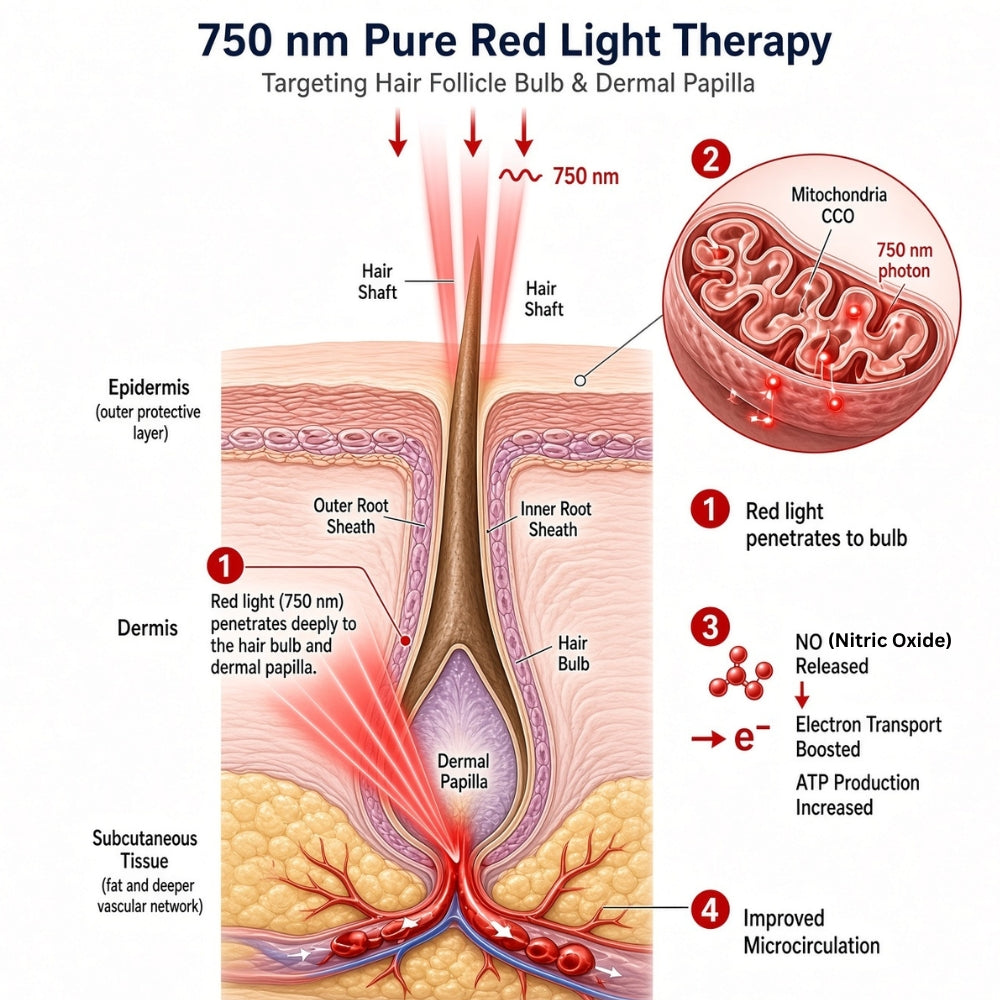
Four steps from the panel to the follicle.
Light reaches the follicle
660nm and 730nm penetrate to the depth where the dermal papilla and hair bulb sit.
Mitochondria absorb it
Cytochrome c oxidase, the terminal enzyme of the electron transport chain, takes up the photons.
Energy output rises
Nitric oxide is displaced, electron transport climbs, and ATP production increases.
The follicle is better resourced
More available energy, plus local vasodilation carrying oxygen to the papilla.
Light acts directly on two of them, and supports the follicle against the other two.
Downstream
The driver
DHT shrinks the follicle a little more with every cycle.
What light does
Acts on the follicle, not the hormone. More ATP for the cells still growing.

Indirect
The driver
Keratin needs iron, zinc and protein. Gaps show up as brittle hair.
What light does
Widens the delivery route so more of what is in your blood actually arrives.

Direct
The driver
Capillaries regress around shrinking follicles. Less oxygen reaches the root.
What light does
Nitric oxide is released, vessels widen, and ATP output rises with it.

Direct
The driver
Microinflammation and flaking degrade the environment the follicle sits in.
What light does
Non-thermal light is associated with calmer local inflammatory signalling.
Swipe to see all four →
Unedited before and after photographs from verified buyers, same angle and same light.
 BeforeAfter
 BeforeAfter
 BeforeAfter
Swipe to see more results →
Individual results vary and are not typical.
Low-level light therapy has been studied in peer-reviewed clinical trials and literature reviews for its effect on hair growth and pattern hair loss.
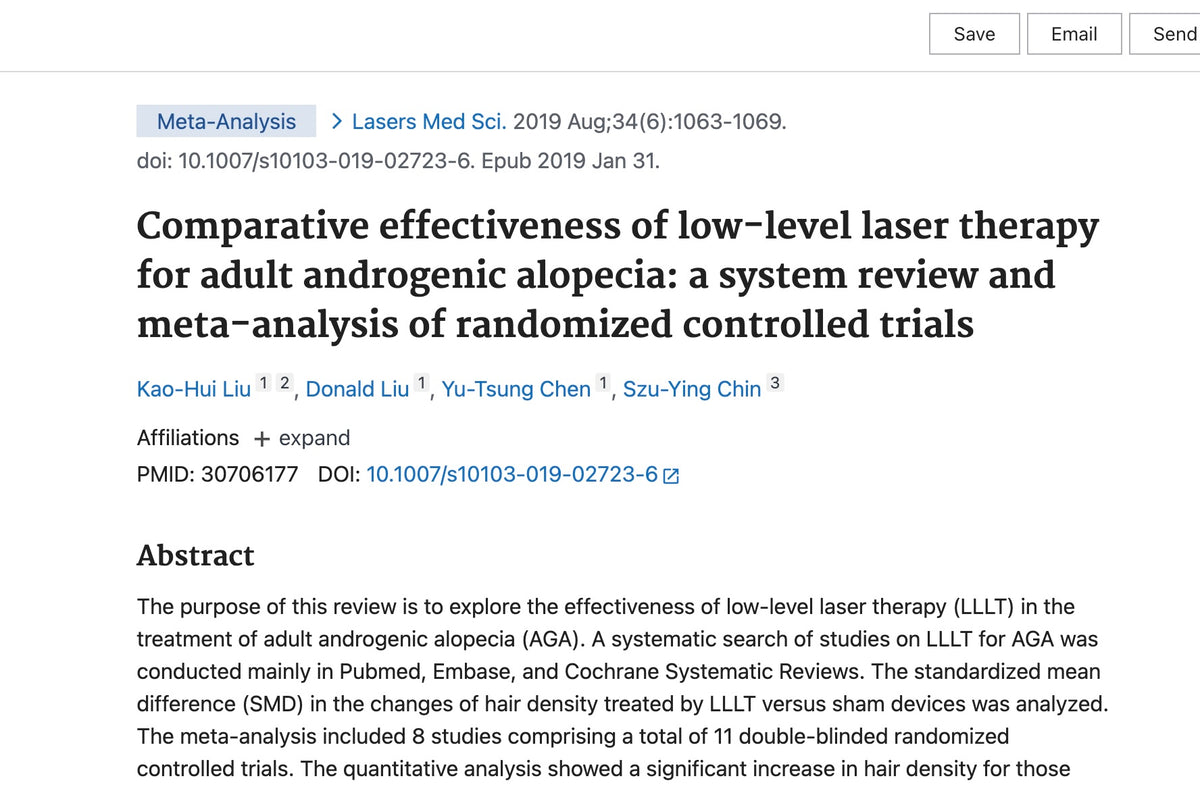
Lasers in Medical Science, 2019
Comparative effectiveness of low-level laser therapy for adult androgenic alopecia
Published results from randomised, sham-controlled trials of low-level light therapy devices.
How a narrow-band LED panel sits against the treatments most people try first.
| Crimson Daily | Minoxidil | Finasteride | Hair Transplant | |
|---|---|---|---|---|
| Drug-free | ✔ | ✘ | ✘ | ✔ |
| No systemic side effects | ✔ | ✘ | ✘ | ✔ |
| At-home, no clinic visits | ✔ | ✔ | ✔ | ✘ |
| One-time cost | ✔ | ✘ | ✘ | ✘ |
| No prescription needed | ✔ | ✔ | ✘ | ✔ |
Swipe the table sideways to see every column →
Based on publicly available information and typical protocols. Not medical advice.
It is not how many light points you cram into a device. It is how much usable light lands on the scalp.
A leading laser cap publishes 1,360 mW as 212 dots with gaps between them. Our 6 inch panel puts out 3,770 mW across a continuous area.
✦ 2.8× the light, at a quarter of the price2.8× the light
3,770 mW from our 6 inch panel against the 1,360 mW a leading laser cap publishes for itself. Same units, both measured as watts of light emitted.
120 LEDs × 31.4 mW each. Working shown further down the page.A row of logos is the cheapest thing to put on a product page. Here is what each one certifies — and what none of them certify.
It means a manufacturer showed their device is substantially equivalent to one already on sale. It is a route to market, not evidence anything works better. It gets written as “FDA approved” constantly. It is not.
It confirms the manufacturer documents and follows a quality process. Useful if you are auditing a supplier. It tells you nothing about what comes out of the device.
It certifies the device will not electrocute you or damage your eyes. Every device sold should meet it. It certifies safety, not that the thing does anything.
It restricts lead and mercury in the components. Worth having, and entirely unrelated to whether your hair responds.
Know the difference.
| Cheap generic LED | Imported laser cap | Crimson Daily | |
|---|---|---|---|
| Light source | Generic broad-spectrum LEDs | 212 × 5mW laser diodes | 72 × 660nm + 48 × 730nm narrow-band LEDs |
| Peak wavelength | Usually unstated | 655nm | 660–665nm and 730–735nm, both published |
| Total optical output | Almost never disclosed | 1,360 mW (their figure) | 3,770 mW |
| Multiple of the laser cap | n/a | 1× | 2.8× |
| Irradiance at the scalp | Unknown | ≈3.9 mW/cm² (worn in contact) | 3.9 mW/cm² at 10cm |
| Dose per session | Unknown | ≈7.0 J/cm² over 30 min | 4.6 J/cm² over 20 min |
| Inside the 3–6 J/cm² studied window | Cannot say | Above it | Yes |
| Datasheet you can read | No | No | Yes, both part numbers published |
| Made | Imported, unbranded | Imported | Assembled in India |
| Extra Charges Due to Import Duties? | Yes | Yes, about 30% of the price | None |
| Typical price | ₹3,000 to ₹7,000 | ₹48,999 to ₹62,999 | Rs. 4,410.00 to Rs. 6,990.00 |
Swipe the table sideways to see every column →
Most red light devices sold in India are finished products picked from a Shenzhen ODM catalogue, with a local logo printed on the box. That is a business model, not engineering.
How Others Do It
Imported components. Built in India.
To be precise: the LEDs are made in China, as almost all LEDs are. What we do not do is buy a finished device and put our name on it. We chose the emitters, designed the board around them, and can tell you exactly what is inside because we specified it.
Our 6 inch panel runs 72 LEDs at 660nm and 48 at 730nm — 60/40. Here is the emission profile, redrawn from the manufacturer datasheets. Two narrow spikes — not the broad smear a generic red LED produces.
Each peak is roughly 20–30nm wide. Almost all the energy lands inside 650–750nm rather than being spread across the visible spectrum and wasted.
660nm is the wavelength nearly all the published hair trials used. 730nm penetrates slightly deeper. Running both covers the band rather than betting on one point in it.
Galaxy HBN2835SFR73002-G at 730nm and HBN2835SDR66002-G at 660nm. We publish both. Ask anyone else for theirs.
Identical 730nm LEDs in both. The difference is how much light lands on your scalp — which changes how far away you hold it and for how long.
4 Inch
60 LEDs · 1,880 mW optical
Requires 2 sessions to cover Crown and Hairline
Use it at
8 cm for 20 min
3.4 mW/cm² → 4.0 J/cm² per session
Rs. 4,410.00
6 Inch
120 LEDs · 3,770 mW optical
Covers the whole head in one session
Use it at
10 cm for 20 min
3.9 mW/cm² → 4.6 J/cm² per session
Rs. 6,990.00
| Distance from scalp | 4 inch , 20 min | 6 inch , 20 min | Verdict |
|---|---|---|---|
| 2 cm | 19.7 J/cm² | 23.4 J/cm² | Too close , well over the studied dose |
| 5 cm | 7.6 J/cm² | 10.9 J/cm² | Above the window |
| 8 cm | 4.0 J/cm² | 6.2 J/cm² | Ideal for the 4 inch |
| 10 cm | 2.9 J/cm² | 4.6 J/cm² | Ideal for the 6 inch |
| 15 cm | 1.5 J/cm² | 2.6 J/cm² | Under-dosing |
| 20 cm | 0.9 J/cm² | 1.6 J/cm² | Barely doing anything |
Swipe the table sideways to see every column →
Figures use the typical 10 mW/sr bin from the Galaxy HBN2835SFR73002-G datasheet. Peak on-axis irradiance; edges of the lit area receive less.
What consistent use actually looks like over six months.
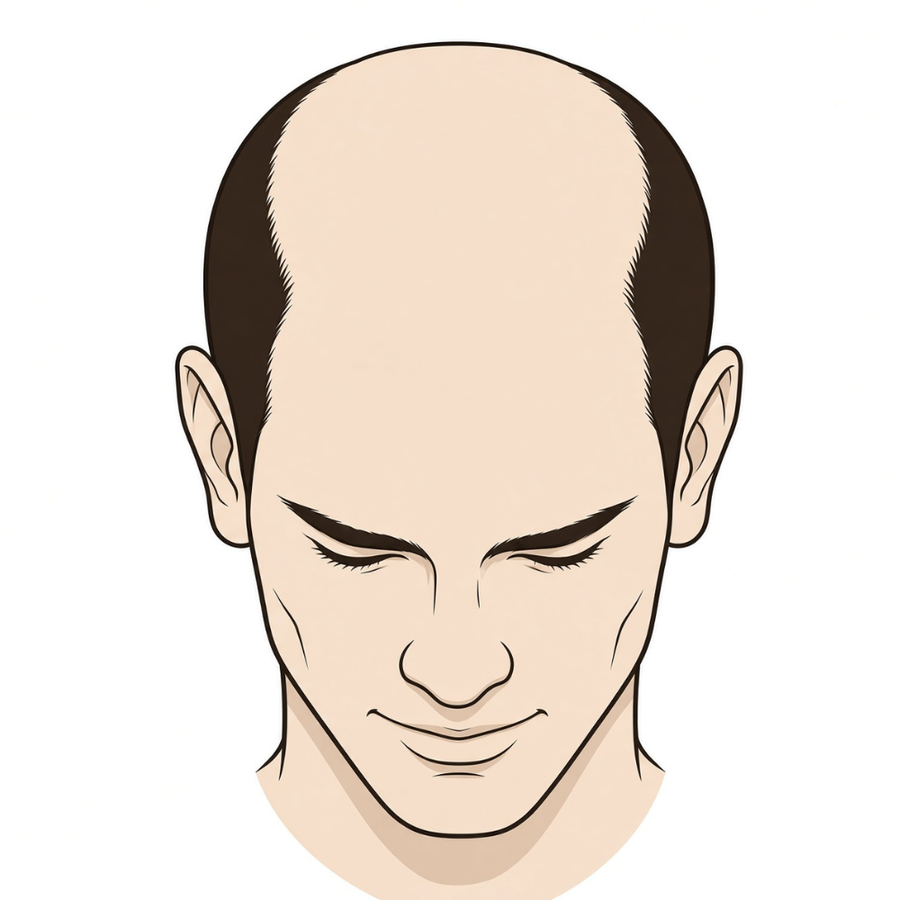
Dormant follicles re-enter the growth phase. Nothing visible yet. This stage is about getting the routine into your day.
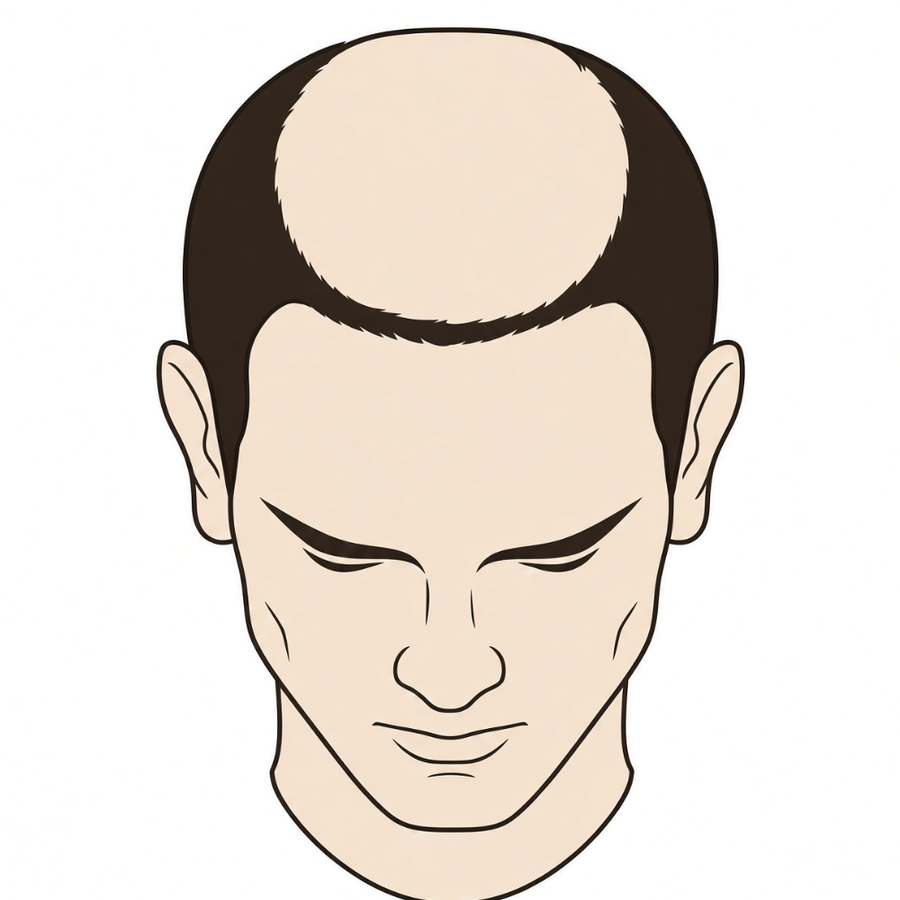
Circulation and the scalp environment improve. The scalp feels less tight, and hair feels stronger at the root.
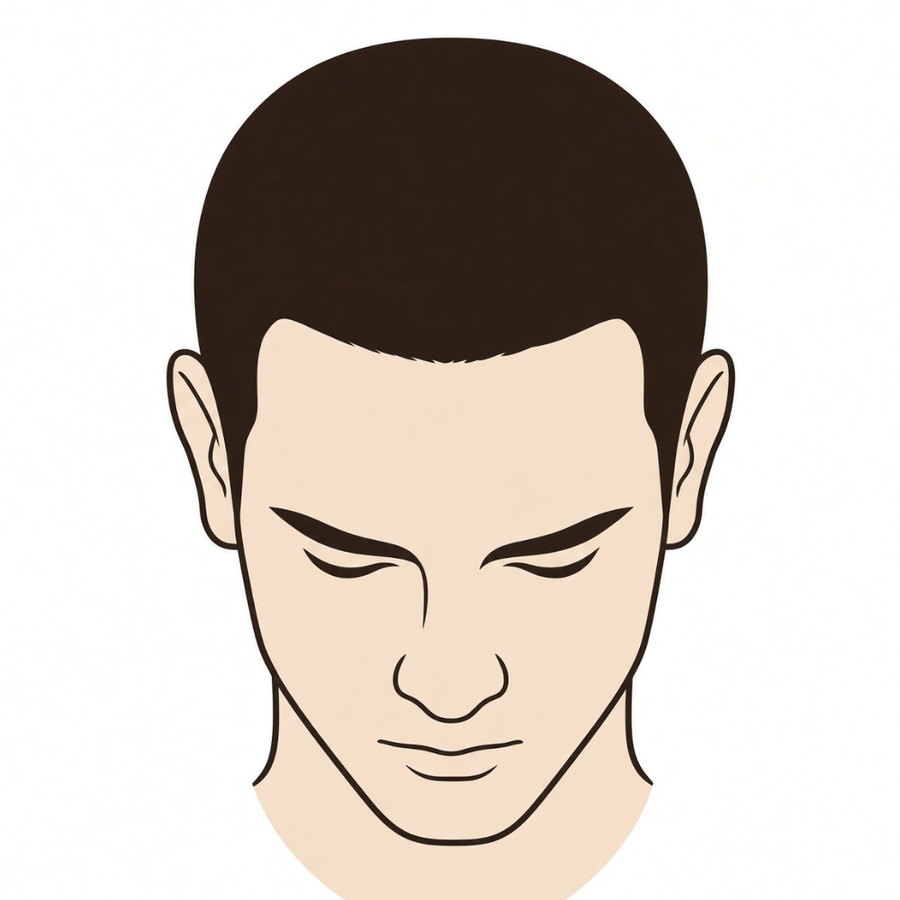
A full growth cycle has turned over. Photograph the same angle in the same light as day one and judge it yourself.
Twenty to thirty minutes a day, every day. In six months you will see a difference or your money back.
Use it consistently for four months. If you see no visible improvement, return it for a full refund.
Register your device within 10 days of delivery. This is mandatory, and the guarantee does not apply without it.
Once your order arrives, email us in-focus photographs so we have a clear, dated starting point to compare against later.
Use the device as directed for the full 120 days. If there is no visible improvement, write to us and we will refund you in full.
Order today and receive it within 1–2 business days. Every shipment tracked and insured.
Covered against manufacturing defects, with free pickup and repair.
Available nationwide. Pay when it reaches you.
Our team is on WhatsApp seven days a week. No bots.
Hands-free on its stand, so a ten-minute session fits around whatever else you are doing.
It is aimed at androgenetic alopecia, where follicles are miniaturised but still alive. Where an area is completely bald there is nothing left for light to act on.
Approximately 30% of the price of an imported product is customs duty. Because we import only components and assemble here, you pay none of it. That is most of the price difference.
Not for this. A laser gives you a focused point where you want an area covered, and a 212-diode cap emits roughly 1W of light in total, against considerably more from our panel.
Often, for three to four weeks. Dormant follicles restarting push out the weak hair still in them. It settles.
Yes. Different pathways, no conflict. Speak to whoever prescribed them before you change your routine.
Four to six months. A full hair growth cycle has to turn over before a density comparison means anything.
The light is non-thermal and contains no UV or blue. Speak to a doctor first if you have a photosensitive condition or take photosensitising medication.
Our LEDs carry ISO, RoHS and IEC certification at component level, and we are applying for FDA clearance. As we say further up this page, none of that tells you what actually matters: whether the light coming out sits in the band we claim, at the output we publish. Those are the numbers to judge us on, and we publish both datasheets so you can.

